
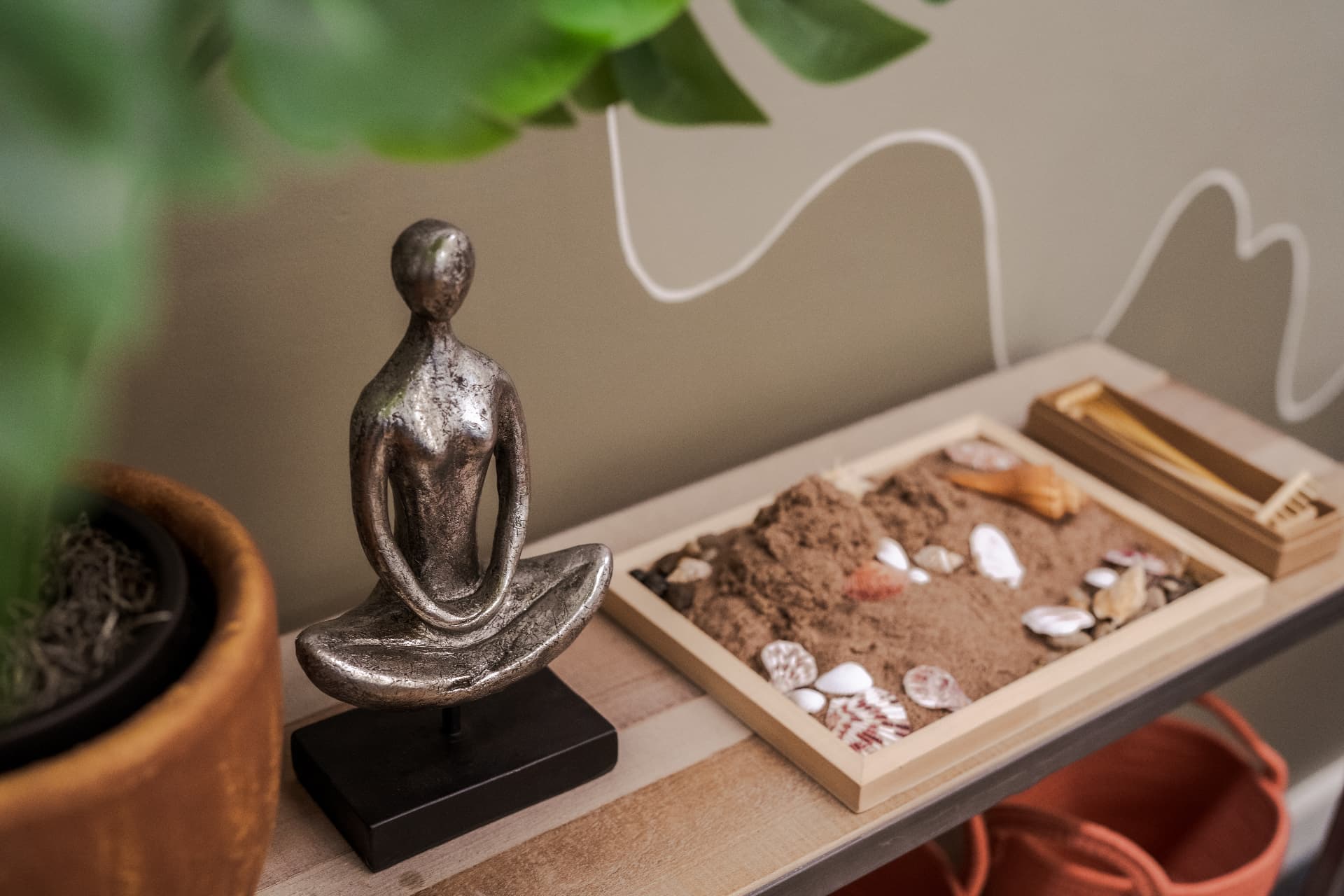
A small meditation figurine beside a miniature zen garden with shells and stones

Our Approach

Design as an instrument of healing.

We use an array of trauma-informed techniques across homes, commercial spaces, and schools — grounded in evidence and a deep connection to the natural world.

01 — Evidence Based Design

Physical design enhances innate healing.

Healing spaces incorporate evidence-based design and healing principles to optimize and improve the quality of care, outcomes, and experiences of patients and staff.

— Samueli Institute
02 — Trauma-Informed Design

Safety, dignity, and predictability.

Trauma-informed environmental design recognizes how physical surroundings affect an individual's sense of identity, worth, and dignity while fostering empowerment, control, predictability, and safety. Our response is to design and maintain supportive, healing environments that help trauma-experienced clients avoid re-traumatization and re-triggering.

03 — Biophilic Design

Connection to the natural environment.

We use biophilic techniques to increase connectivity to nature through direct nature, indirect nature, and space-and-place conditions. Psychologists have indicated that physical environments can influence treatment process and results.

04 — Purified Spaces

Cleaner air, safer materials.

We address the significant sources of stress and toxins that exist in homes, commercial spaces, and schools — allergens, carcinogens, and everyday stressors — and replace them with safe, effective solutions, alongside in-home ADA accessibility for children and families. Purifying a space is an act of prevention and restoration: a step from health toward wellness, and ultimately wholeness.

Children and adolescents are typically more sensitive to their environments than adults, yet are often overlooked in architectural and urban planning. Treating the built environment with reverence makes it a sanctuary for rest, recovery, and rejuvenation.

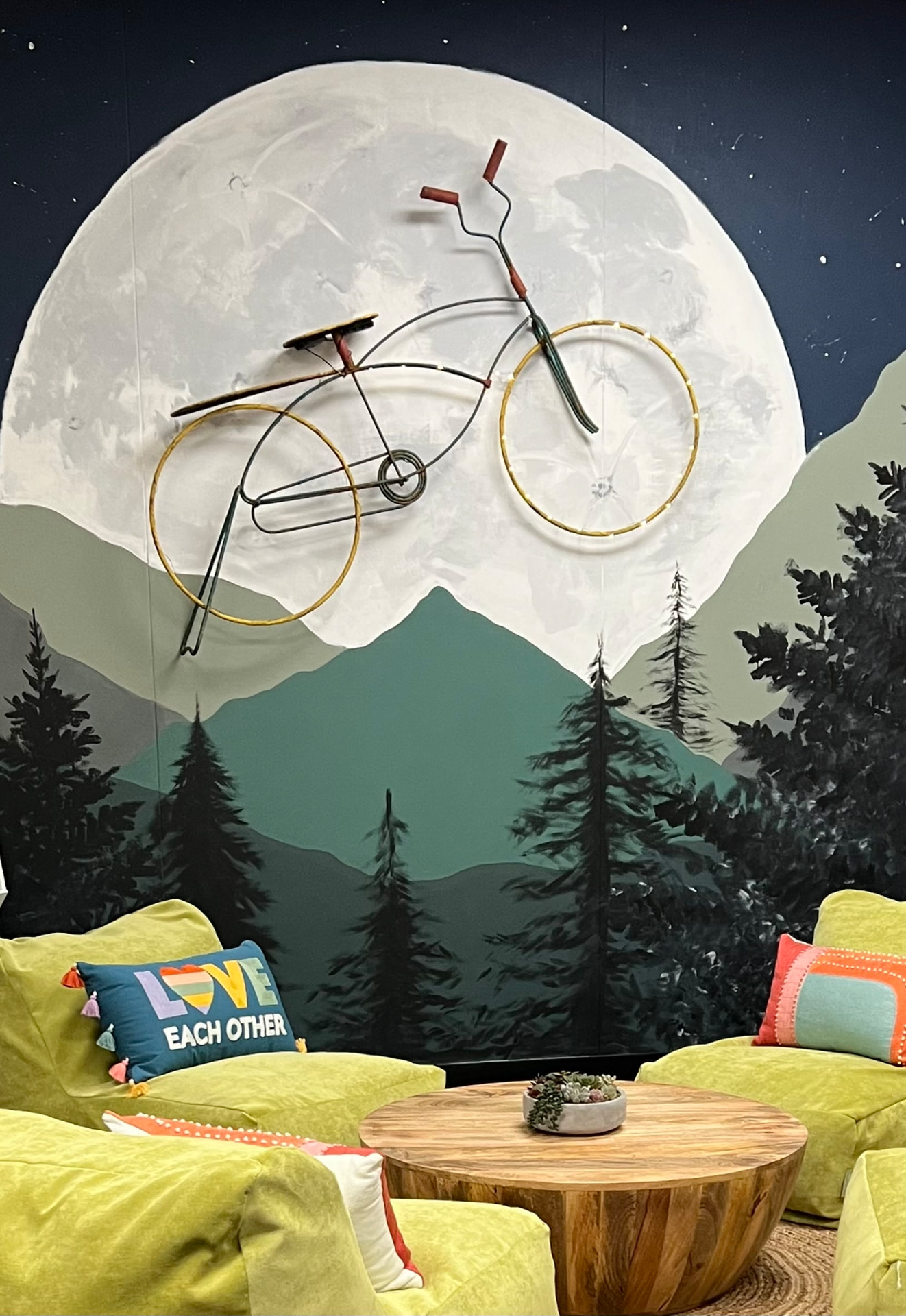
A cozy WellSpace with green chairs, a wooden table, and a mountain mural featuring a large moon and bicycle sculpture
“We may not be responsible for the world that created our minds, but we can take responsibility for the mind for which we create our world.”Gabor Mate